Building an Audit-Ready Supply Chain for Growth
Growth is a positive sign for any fertility organization. Whether it involves opening a new clinic, joining a larger network, expanding laboratory capabilities, or supporting higher patient volumes, growth reflects increasing demand and a commitment to making fertility care more accessible. It also changes the operational expectations placed on the organization. Processes that worked effectively for a single clinic must now support more locations, people, reproductive material shipments, and increasingly complex patient journeys without sacrificing the consistency that patients and clinical teams depend on.
Most fertility organizations prepare for this transition by strengthening their clinical infrastructure. Laboratories refine procedures, quality teams formalize documentation, and leadership establishes systems designed to maintain consistency as operations expand. Yet transportation is not always evaluated with the same level of rigor, even though reproductive materials routinely move between clinics, laboratories, storage facilities, and treatment centers. As networks grow and patient journeys become more distributed, transportation is connected to quality management, operational oversight, and regulatory readiness.
The challenge is not simply moving reproductive materials safely from one location to another. It is maintaining the same level of control, traceability, and consistency as transportation activity becomes more frequent and complex. The operational practices that support a single clinic are not always sufficient for a multi-site network, higher shipment volumes, or increasing accreditation expectations. As fertility organizations grow, logistics must evolve alongside clinical and quality systems to support long-term scalability, audit readiness, and patient confidence.
Growth Requires More Than the Ability to Handle More Shipments
Transportation processes often appear manageable when an organization is relatively small. A clinic may work with familiar providers, rely on locally-developed procedures, and oversee transportation activities through a limited number of team members. Those practices may perform effectively within a single location, but growth places them under new pressure. As shipment frequency increases and additional locations become involved, minor differences in preparation, documentation, monitoring, and oversight can introduce variability across the organization.
This complexity does not always appear as a major operational failure. More often, it emerges through incremental differences that accumulate over time. One clinic may maintain records differently from another. Team members may follow slightly different procedures for preparing shipments. Shipment data may be stored across multiple systems, while exceptions are addressed through individual emails or informal workarounds. Each difference may seem manageable on its own, but together they can make it more difficult for quality and operations teams to demonstrate that transportation is being governed through a consistent process.
For reproductive medicine, that distinction matters. Embryos, oocytes, sperm, ovarian tissue, and testicular tissue are highly sensitive and often irreplaceable materials connected to deeply personal patient journeys. Clinics therefore need more than confirmation that materials arrived at their destination. They need confidence that each shipment followed a defined process, that custody and condition were documented throughout transit, and that the records can be reviewed without having to reconstruct the journey after it is complete.
The result is not simply the ability to manage more shipments. It is the ability to maintain control as transportation becomes more frequent, geographically distributed, and operationally important.
Audit Readiness Should Be Built into Routine Operations
Audit readiness is often treated as a temporary priority associated with an upcoming inspection or accreditation review. In practice, it reflects the quality of the processes followed every day. A clinic may have strong procedures within the laboratory, but if transportation records are incomplete, inconsistent, or difficult to retrieve, the organization may still struggle to demonstrate how sensitive materials were protected once they left the facility.
The most difficult questions often arise after a shipment has been completed. A quality team may need to confirm who maintained custody at a particular point, determine whether appropriate conditions were sustained, review the handling history, or explain how an exception was managed. When records are fragmented across emails, courier scans, spreadsheets, and individual systems, answering those questions can become a time-consuming exercise. Increased shipment volumes and multi-site operations only amplify that burden.
An audit-ready supply chain approaches documentation differently. Records are generated as a routine part of the transportation process rather than assembled afterward. Chain of custody is maintained throughout the journey, condition data is captured during transit, and key handling activities are documented through defined workflows. When information is needed for an audit, investigation, patient inquiry, or internal review, the organization can rely on an established record instead of individual recollections or a collection of disconnected files.
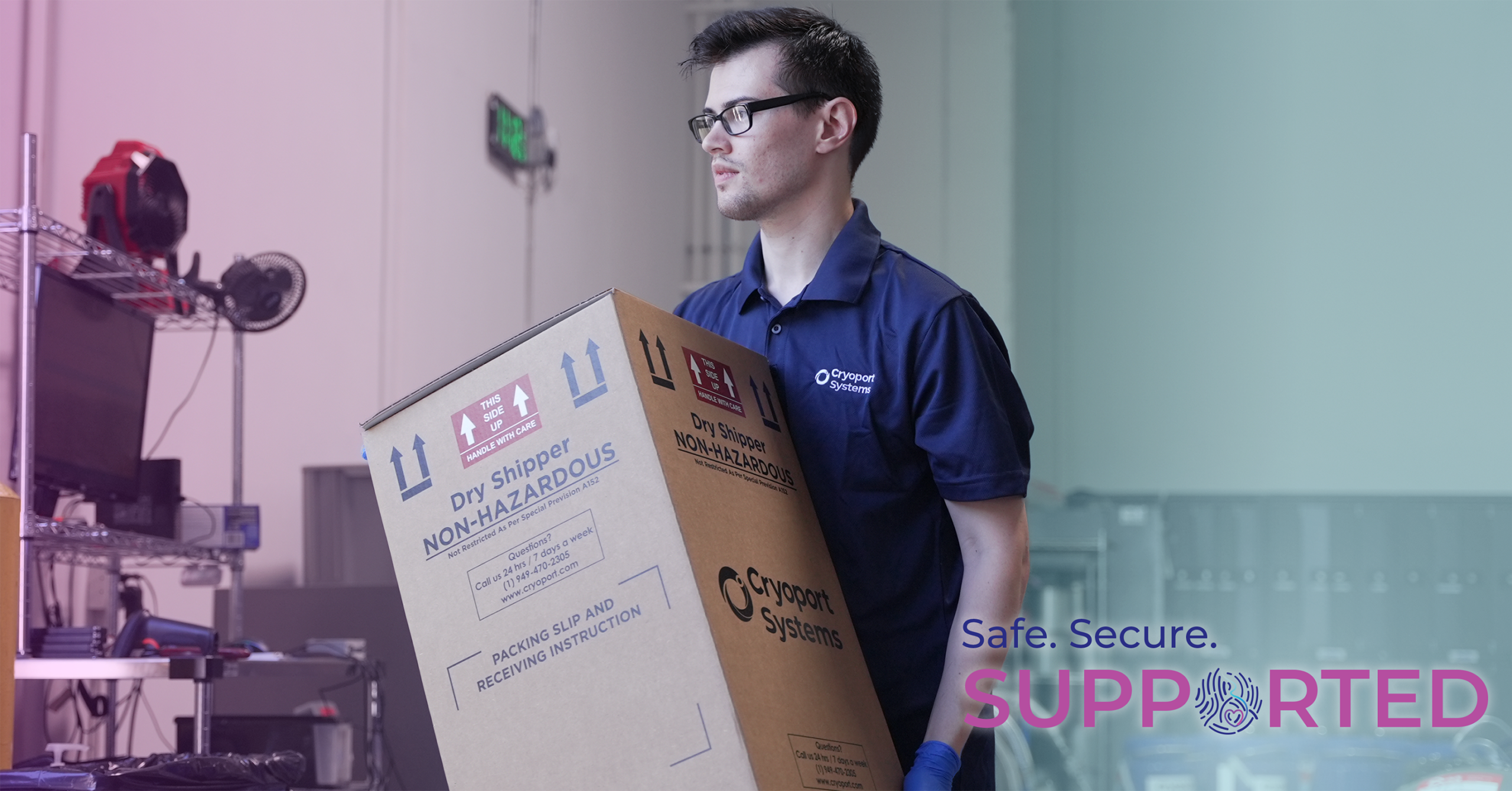
Few clinics have the resources to build this level of transportation oversight internally. Cryoport Systems supports this approach through Chain of Compliance®, which integrates chain of identity, chain of custody, and chain of condition into a unified framework. Combined with continuous condition monitoring and the Cryoportal® logistics management system, this approach gives clinics visibility into the shipment journey and access to records designed to support ongoing quality oversight. Audit readiness becomes less about preparing for a particular review and more about operating within a process that consistently produces the evidence quality teams need.
This level of control is particularly important for organizations preparing to grow. As new clinics are added, teams change, and transportation volume increases, clinics cannot depend on knowledge held by a small group of employees or processes that vary by location. They need records and procedures that remain consistent regardless of where a shipment begins or who is responsible for coordinating it.
Bringing Proven Life Sciences Rigor to Reproductive Medicine
Fertility clinics may not describe themselves as preparing for commercialization in the same way a biopharmaceutical company would, but growing clinics face many of the same operational questions. Can processes continue to perform consistently as volume increases? Can the organization maintain traceability across a larger network? Are systems standardized, documented, and capable of supporting future growth? Can quality teams identify and address risk before it creates operational challenges or impacts patient confidence?
These are questions that have long shaped supply chains within cell and gene therapy and other highly regulated life sciences markets. Organizations in these fields depend on comprehensive traceability, documented process control, qualified equipment, continuous monitoring, and proactive risk mitigation because they manage sensitive, valuable, and often irreplaceable materials. Those same principles are increasingly relevant in reproductive medicine as clinic networks expand, transportation activity grows, and patient journeys become more complex.
Fertility clinics are supporting increasingly connected care journeys. Patients may begin treatment at one location, store materials at another facility, or transfer reproductive materials as they relocate or pursue care elsewhere. At the same time, multi-clinic networks have become more common, and transportation activity often spans multiple locations and stakeholders. As this complexity grows, organizations need logistics processes that can support expansion without introducing additional operational risk.
Not every fertility organization has the resources or desire to build a transportation quality system from the ground up. Establishing validated processes, maintaining comprehensive documentation, monitoring shipments, managing equipment qualification, and creating complete traceability requires significant infrastructure and ongoing oversight. For many growing clinics, partnering with an organization that already provides these capabilities is a more practical path to scalability.
Cryoport Systems provides a commercial-grade logistics ecosystem built on ISO 21973-certified processes, validated shipping systems, continuous monitoring, and Chain of Compliance® traceability, allowing clinics to leverage a framework specifically designed for sensitive biological materials. Rather than developing transportation standards independently across multiple locations, clinics can operate within an established system designed to support consistency, visibility, and operational control as they grow.
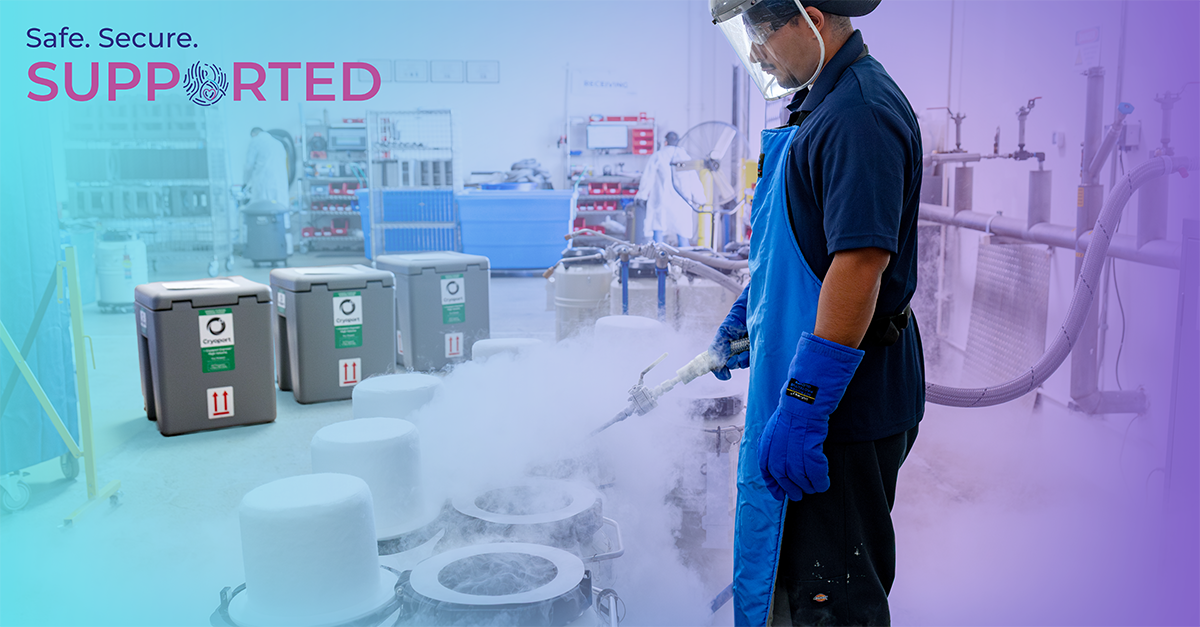
ISO 21973-certified processes provide a structured foundation for quality management, documentation, process control, and traceability during the transportation of sensitive biological materials. Validated shipping systems provide documented evidence of performance under defined conditions, while ongoing inspection and requalification help ensure those systems continue to perform according to established standards over time. Continuous monitoring adds another layer of oversight by capturing condition data throughout transit, giving clinics greater visibility into the shipment journey and access to objective data that supports both quality management and audit readiness.
Most significantly, Cryoport Systems integrates these capabilities through its proprietary Chain of Compliance®. By bringing together chain of identity, chain of custody, and chain of condition within a unified framework, Chain of Compliance® creates comprehensive traceability throughout the transportation journey. Clinics gain access to consistent records, shipment visibility, and documentation that supports quality oversight, operational reviews, accreditation preparedness, and long-term scalability.
The practical benefit is that clinics do not need to build every component of this infrastructure internally. Instead, they can leverage a logistics ecosystem developed to support some of the most demanding supply chains in life sciences while maintaining the visibility, control, and documentation needed to support continued growth in reproductive medicine.
Building for the Next Stage of Growth
Sustainable growth requires more than adding capacity. It requires an operational foundation capable of supporting greater complexity without allowing quality or consistency to erode. For fertility clinics, transportation is an important part of that foundation because it connects locations, laboratories, storage providers, clinical teams, and patients across the reproductive journey.
Organizations that wait until after expansion to address logistics may find themselves trying to harmonize different procedures, qualify multiple providers, reconcile inconsistent documentation, or rebuild processes while managing higher shipment volumes. A more effective approach is to establish a scalable logistics framework before those pressures emerge. When every clinic operates through consistent procedures and every shipment generates structured records, expansion does not have to create additional uncertainty.
Cryoport Systems enables fertility organizations to build that foundation through globally standardized procedures, ISO 21973-certified processes, validated shipping systems, continuous monitoring, and Chain of Compliance® traceability. Together, these capabilities help reduce site-to-site variability, support audit-ready documentation, and provide the visibility quality and operations teams need as the organization grows. Clinics can expand their networks and support higher patient volumes with confidence that transportation remains aligned with the same commitment to quality applied inside the laboratory.
Patients may never see the quality systems, validation programs, monitoring technologies, or compliance records operating behind the scenes, but those elements contribute directly to the confidence they place in their clinic. They expect sensitive reproductive materials to be protected with care and precision wherever the treatment journey leads. A standardized and fully traceable supply chain helps clinics fulfill that expectation while preparing for changing operational and regulatory demands.
Growth readiness is ultimately about more than handling additional volume. It is about preserving predictability, accountability, and patient trust as an organization evolves. By partnering with a logistics provider engineered for regulatory rigor and long-term scalability, fertility clinics can establish an audit-ready supply chain that supports their needs today and provides a stronger foundation for what comes next.